

Building a retaining wall requires precise planning and calculations to ensure structural integrity, proper drainage, and cost efficiency. Our comprehensive retaining wall calculator helps homeowners and contractors accurately estimate materials, costs, and dimensions for any retaining wall project.
How to Use Our Retaining Wall Calculator
Follow these simple steps to get accurate estimates for your retaining wall project:
- Determine if your wall will include a cap row (the finishing layer)
- Input your wall dimensions (height and length)
- Enter your block specifications
- Adjust backfill requirements if needed
- Input current material costs for accurate budgeting
Will there be a cap row?
Understanding Retaining Wall Construction
Retaining walls serve both functional and aesthetic purposes in landscaping. They prevent soil erosion, create usable level areas on sloped properties, and can add visual interest to your outdoor space. Understanding the key components of retaining wall construction will help you make informed decisions for your project.
Key Components of a Retaining Wall
- Foundation: A properly compacted base that provides stability
- Wall Blocks: The primary structural elements that form the wall face
- Cap Blocks: The finishing layer that provides a clean appearance and protects the wall
- Backfill: Gravel placed behind the wall for proper drainage
- Drainage System: Prevents water buildup behind the wall that could cause failure
Why Proper Calculations Matter
Accurate material calculations are essential for several reasons:
- Budget Management: Avoid unexpected costs by knowing exactly how many materials you need
- Structural Integrity: Properly calculated walls are less likely to fail over time
- Time Efficiency: Reduce multiple trips to the supplier by getting all materials at once
- Waste Reduction: Minimize excess materials that would otherwise go unused
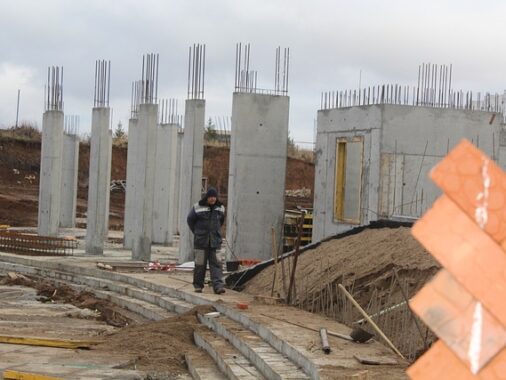
Retaining Wall Construction
Professional Construction Tips
- Always check local building codes before starting your project
- Consider hiring a professional for walls over 3-4 feet high
- Use geogrid reinforcement for taller walls or unstable soil conditions
- Install proper drainage to prevent hydrostatic pressure buildup
- Allow for slight backward lean (batter) for increased stability
Frequently Asked Questions
How accurate is this retaining wall calculator?
Our calculator provides professional-grade estimates based on standard construction practices. However, we always recommend adding 5-10% to your final material count to account for cutting waste, breakage, and measurement variations.
Do I need a permit for my retaining wall?
Permit requirements vary by location, but generally, walls over 3-4 feet in height require permits. Always check with your local building department before starting any retaining wall project.
What’s the purpose of gravel backfill?
Gravel backfill serves two critical functions: it provides proper drainage to prevent water pressure buildup behind the wall, and it creates a stable foundation that reduces settling over time.
How deep should my foundation be?
As a general rule, your foundation should be dug to a depth equal to 1/8 of the wall height plus 4 inches for the gravel base. For a 4-foot wall, this would be approximately 10 inches (6 inches for the 1/8 rule plus 4 inches for base).
When should I consult a professional?
Consider professional consultation for walls over 4 feet tall, walls supporting structures, projects on steep slopes, or if you’re dealing with poor soil conditions. Safety should always be your top priority.
Can I build a retaining wall myself?
Many homeowners successfully build smaller retaining walls (under 3 feet) as DIY projects. For larger walls or complex situations, professional installation is recommended to ensure structural integrity and compliance with local codes.
Start Your Retaining Wall Project With Confidence
Now that you have accurate material estimates and understand the key components of retaining wall construction, you’re ready to begin your project. Use our calculator to adjust measurements as needed and create multiple scenarios to find the most cost-effective solution for your landscape needs.
Ready to get started? Bookmark this page for easy reference during your project, share your calculations with suppliers for accurate pricing, or print your results to take to your local home improvement store. For complex projects, consider consulting with a landscaping professional who can provide site-specific advice tailored to your property’s unique conditions.